India is moving towards its centenary of independence in 2047, with dreams of becoming healthier, stronger, and more inclusive as a nation. One of the bold and inspiring visions in this journey is Deafness Free India 2047. This mission is not just about medical solutions; it is about ensuring that every child, adult, and elder in our country has the opportunity to hear, communicate, and live a life without the barriers caused by untreated hearing loss. Hearing is central to human connection. When it is affected, it does not only impact communication but also education, employment, and social inclusion. By focusing on Deafness Free India 2047, we are talking about empowering every voice and every ear, creating a society where no one is left behind due to hearing challenges.
Why the Year 2047 Matters?
The choice of 2047 is symbolic and practical. By then, India will celebrate 100 years of independence. A healthier nation is an important part of that celebration. Setting a timeline also helps policymakers, healthcare organizations, and communities to work together with measurable milestones.
The idea behind Deafness Free India 2047 is to:
- Build awareness from grassroots to urban centers.
- Strengthen early screening and diagnosis.
- Provide affordable hearing care solutions.
- Empower communities with knowledge and resources.
Understanding the Burden of Deafness in India
Hearing loss is often called a “silent disability” because it can remain unnoticed for years. In India, millions of people live with untreated hearing problems. According to health studies, nearly 6–8% of India’s population may suffer from significant hearing impairment, and the number increases with age.
- Children may struggle with speech and learning if hearing loss is not identified early.
- Young adults may face limitations in career opportunities due to communication barriers.
- Elderly people often experience isolation, depression, and reduced quality of life when hearing fades away.
Importance of Early Screening and Awareness
One of the biggest challenges with hearing loss is late detection. In many cases, parents, teachers, or individuals themselves realize the problem when it has already affected education or social life.
To achieve Deafness Free India 2047, early screening must become a part of routine healthcare:
- Newborn Screening: Every child should be tested for hearing abilities in the first few months of life.
- School Screening: Regular hearing check-ups during school years can help catch problems early.
- Workplace Awareness: Employees in noisy environments need protective measures and regular tests.
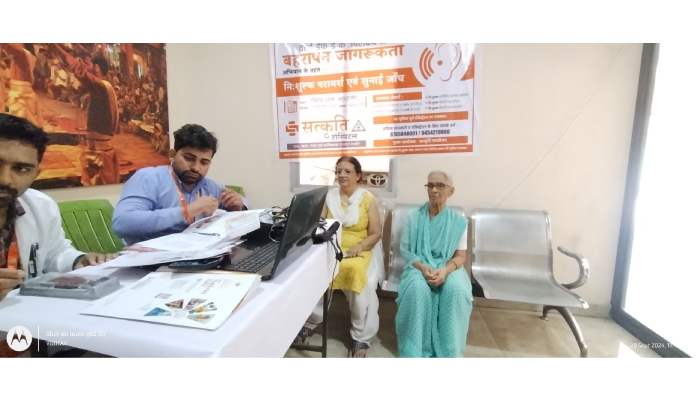
- Community Camps: Free health camps in rural and semi-urban areas can reach people who otherwise avoid medical facilities.
Role of Technology and Innovation
Technology is playing a transformative role in healthcare, and hearing care is no different. Affordable and innovative solutions are key to Deafness Free India 2047. Some examples include:
- Digital Hearing Aids: Modern devices are smaller, more effective, and user-friendly.
- Cochlear Implants: For severe cases, implants can restore the sense of hearing.
- Mobile Apps: Simple apps can help with hearing tests, therapy exercises, or sign language learning.
- Telemedicine: Virtual consultations make it easier for people in remote areas to connect with specialists.
Community Participation and Social Responsibility
No national mission can succeed without people’s participation. Communities play a vital role in making Deafness Free India 2047 a reality. Here’s how:
- Schools and Teachers: Can identify children with difficulties and guide parents for support.
- Local Leaders: Can encourage participation in health camps and awareness drives.
- Non-Governmental Organizations (NGOs): Can run outreach programs, distribute hearing aids, and organize workshops.
- Corporate Social Responsibility (CSR): Companies can fund awareness projects, provide assistive devices, and support research.
Overcoming Stigma and Myths
In many parts of India, people hesitate to admit hearing problems due to stigma or lack of knowledge. Some myths include:
- Only old people lose hearing.
- Hearing aids are useless.
- Treatment is always too costly.
Government Policies and Partnerships
The government has already introduced programs like the National Programme for Prevention and Control of Deafness (NPPCD). However, to reach the goal of Deafness Free India 2047, stronger efforts are needed:
- Expanding hearing care facilities in rural areas.
- Training more ENT specialists, audiologists, and therapists.
- Subsidizing hearing aids and implants for low-income families.
- Partnering with foundations, NGOs, and private organizations for large-scale campaigns.
Looking Ahead: A Collective Mission
The vision of Deafness Free India 2047 is not just a medical goal; it is a social mission. It is about creating a country where no child misses out on education due to hearing loss, no adult loses career opportunities because of untreated problems, and no elder feels cut off from loved ones.
Empowering every voice and every ear means:
- Equal access to healthcare.
- Inclusive education and employment.
- Supportive communities and families.
- A future where communication barriers are minimized.
Conclusion
As India prepares to celebrate 100 years of independence in 2047, the dream of Deafness Free India 2047 gives us hope for a healthier and more inclusive society. Achieving this vision will require awareness, technology, policies, and above all, compassion. Each of us has a role to play. From spreading awareness in our neighborhoods to supporting those with hearing difficulties, small steps will lead to big changes. Together, we can empower every voice and every ear, ensuring that the sound of progress is heard by all.